


Lactose intolerance in food service: how your guests can enjoy everything again
Lactose intolerance in food service: how your guests can enjoy everything again
Lactose intolerance affects many guests. Why eating out becomes guesswork, where lactose hides on the menu and how a single dose of lactase in the venue helps pizzerias, ice cream parlours and cafés.
 By Alessio - MarketingPublished on 15.10.20268 min read
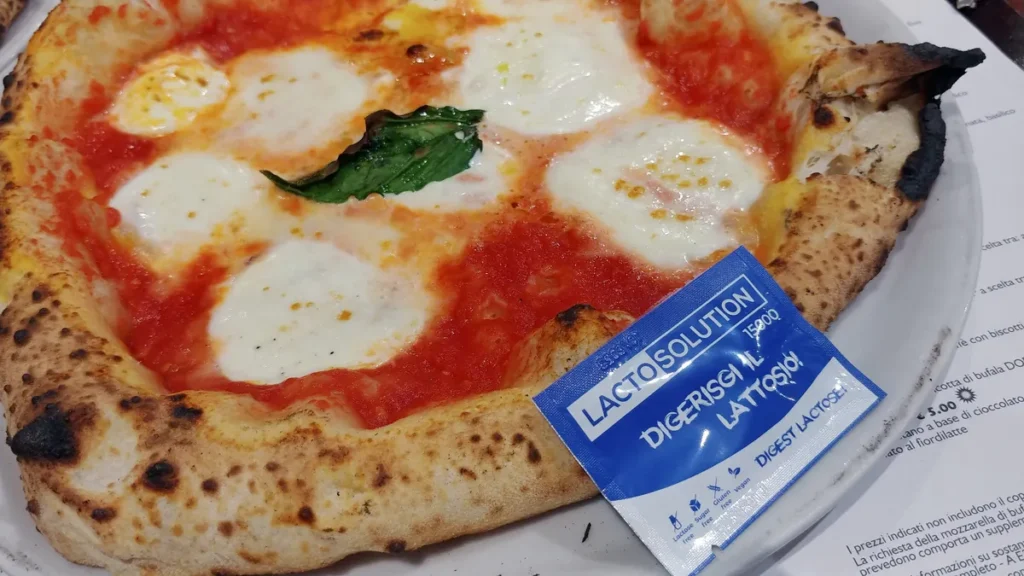
In short
- Worldwide, more than 65% of adults digest lactose only partially; in Europe it is around one in four people on average.
- For those affected, eating out is often guesswork: how much lactose is in the dessert, the ice cream, the cappuccino?
- Lactose-free alternatives only help partly and make purchasing and the kitchen more complicated.
- A practical solution is a single dose of lactase right there in the venue: the guest takes one tablet before eating and can choose from the whole menu again.
- With the Lactosolution counter dispenser (50 single doses), pizzerias, ice cream parlours, cafés and restaurants offer this service with no extra work.
An evening at the pizzeria, an ice cream in the afternoon, a cappuccino after lunch: for most guests these are carefree moments. For people with lactose intolerance, though, the calculations start as soon as they open the menu. What can I order without feeling unwell later? And what should I leave out?
For food service businesses, this is more than a side issue. If you understand these guests and offer them a simple solution, you gain trust, regulars and sometimes a whole table. In this article we look at what lies behind lactose intolerance, why it becomes a problem when eating out, and how a single dose of lactase right in your venue can make the difference.
What is lactose intolerance?
Lactose is the natural sugar in milk. To be absorbed, it has to be split in the small intestine by an enzyme: lactase, which breaks it down into glucose and galactose.
In many people, the body produces less lactase after childhood. The lactose then reaches the large intestine undigested, where gut bacteria ferment it. Typical consequences are bloating, stomach pain, cramps, diarrhoea or nausea, usually between half an hour and two hours after eating. How severe the symptoms are varies greatly from person to person.
The figures show how widespread the issue is: worldwide, reduced lactose digestion probably affects more than 65% of the population. In Europe the average is around 28%, with big differences: from about 2% in Scandinavia to around 70% in southern Italy.
Important in practice: most people affected don’t have to avoid dairy completely. Many tolerate small amounts of lactose well, often up to about 15 grams spread over the day. Problems start when several lactose-containing components add up in a single meal.
Where is lactose hiding? A look at the pizzeria menu
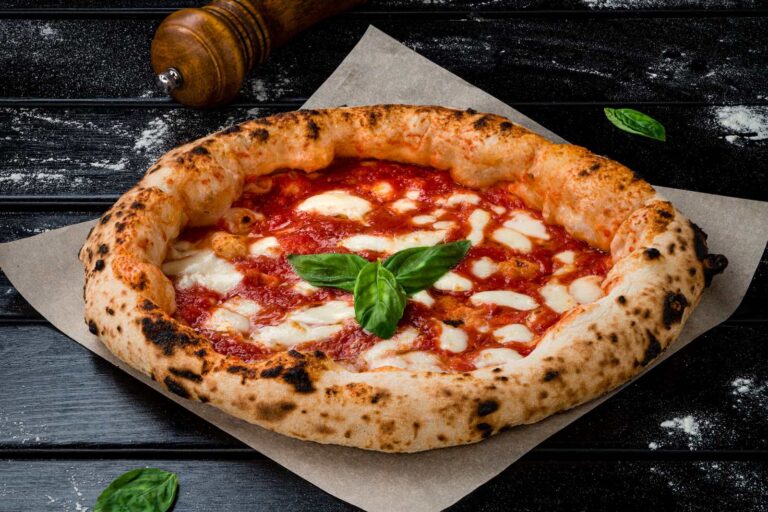
Good to know for pizza makers: the pizza itself is often not the main problem. Fresh mozzarella contains little lactose, and aged hard cheeses such as Parmigiano Reggiano or Grana Padano are practically lactose-free. Cream sauces, ricotta, desserts, ice cream and milk drinks are a different story.
| Food | Lactose per 100 g (approx.) | Typical on the menu |
|---|---|---|
| Whole milk | 4.9 g | Cappuccino, latte macchiato, milkshake |
| Cooking cream | 3.9 g | Pasta sauces, desserts |
| Ricotta | 3.5 g | Calzone, pizza bianca, cannoli |
| Plain yoghurt | 2.6 g | Dips, breakfast |
| Butter | 1.1 g | Pastries, sauces |
| Mozzarella | 0.7 g | Pizza margherita |
| Buffalo mozzarella | 0.4 g | Pizza with bufala, caprese |
| Parmigiano Reggiano / Grana Padano | less than 0.01 g | Pasta, pizza topping |
Rounded values based on Facioni et al., Journal of Translational Medicine (2020). The actual content varies by product and recipe.
A concrete example: a cappuccino with around 150 ml of milk already contains about 7 grams of lactose. Add a pizza with ricotta or a tiramisu and a scoop of milk ice cream, and many people affected quickly exceed the amount they tolerate.
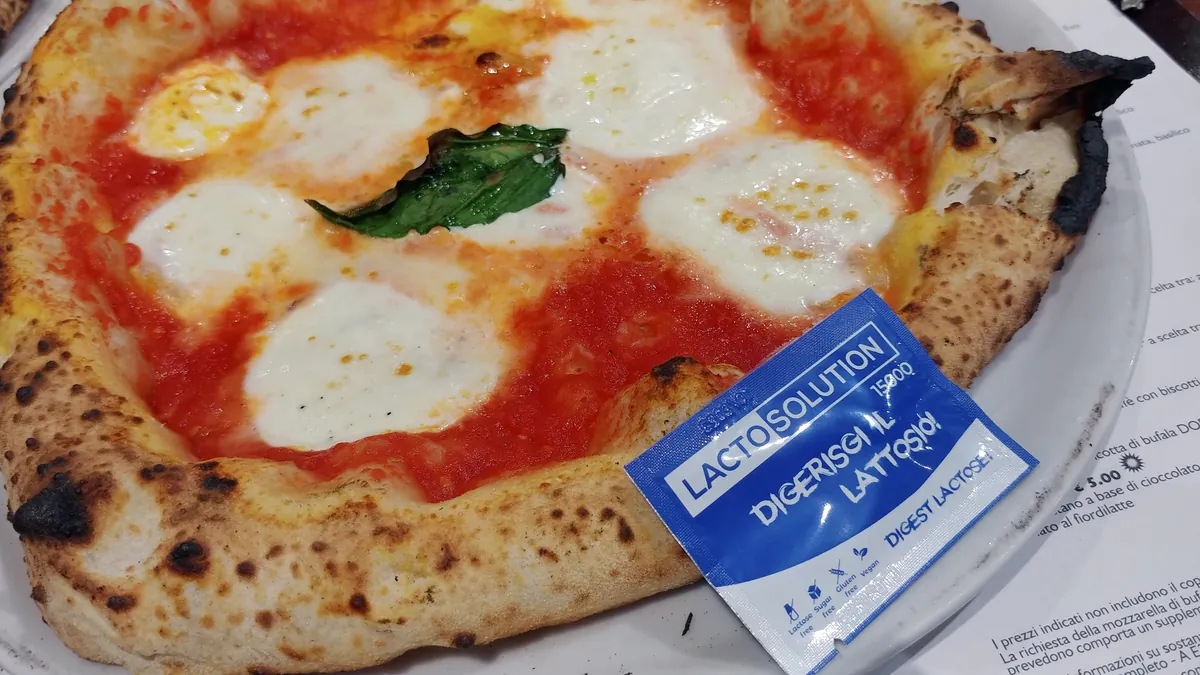
Why eating out becomes a problem
At home, people with lactose intolerance know exactly what is in their food. In a restaurant it’s different. The menu lists milk as an allergen, but not how much lactose a dish contains. So people order cautiously, go without or improvise.
For guests this means:
- Uncertainty: do I order my favourite dish and risk feeling unwell, or do I choose something else?
- Going without: no dessert, no ice cream, no cappuccino, even though they are part of the experience.
- Awkwardness: always having to ask is uncomfortable for many, especially in company.
And for your business? A guest who feels unsure orders less. Even more important is the group effect: at a family dinner or a company party, if one person is lactose intolerant, they often decide where the whole group goes. Offering a simple solution makes you the safe choice.
Existing solutions and their limits
Many businesses respond with lactose-free alternatives: lactose-free milk for coffee, lactose-free mozzarella, a lactose-free ice cream. That’s a good start, but it has limits:
- Extra products mean more purchasing, more storage space and more processes in the kitchen.
- Not every product exists in a lactose-free version, and not every alternative tastes like the original. Who would take the buffalo mozzarella off a Neapolitan pizza?
- The guest’s choice remains limited: they still have to fall back on the “safe” dishes.
That’s why some people carry their own lactase tablets. But they are often left at home just when you decide to eat out on the spur of the moment.
The practical solution: lactase as a single dose right in the venue
This is where a simple idea comes in: instead of rewriting the menu, the business offers its guests the missing enzyme as a single dose to take to the table.
The principle is well described scientifically. Lactase taken with a meal containing lactose improves lactose digestion in individuals who have difficulty digesting lactose. The European Food Safety Authority (EFSA) has confirmed this effect from 4,500 FCC units of lactase per meal.
That’s exactly why the Italian manufacturer Nutras developed Lactosolution as a single dose for food service, according to the manufacturer the world’s first HoReCa solution for people with lactose intolerance. Each tablet contains 150 mg of lactase, equivalent to 15,000 FCC units, plus calcium. The product is gluten-free, lactose-free, sugar-free and vegan, and it received an award at SIGEP for innovation in food service.
How the counter dispenser works in your venue
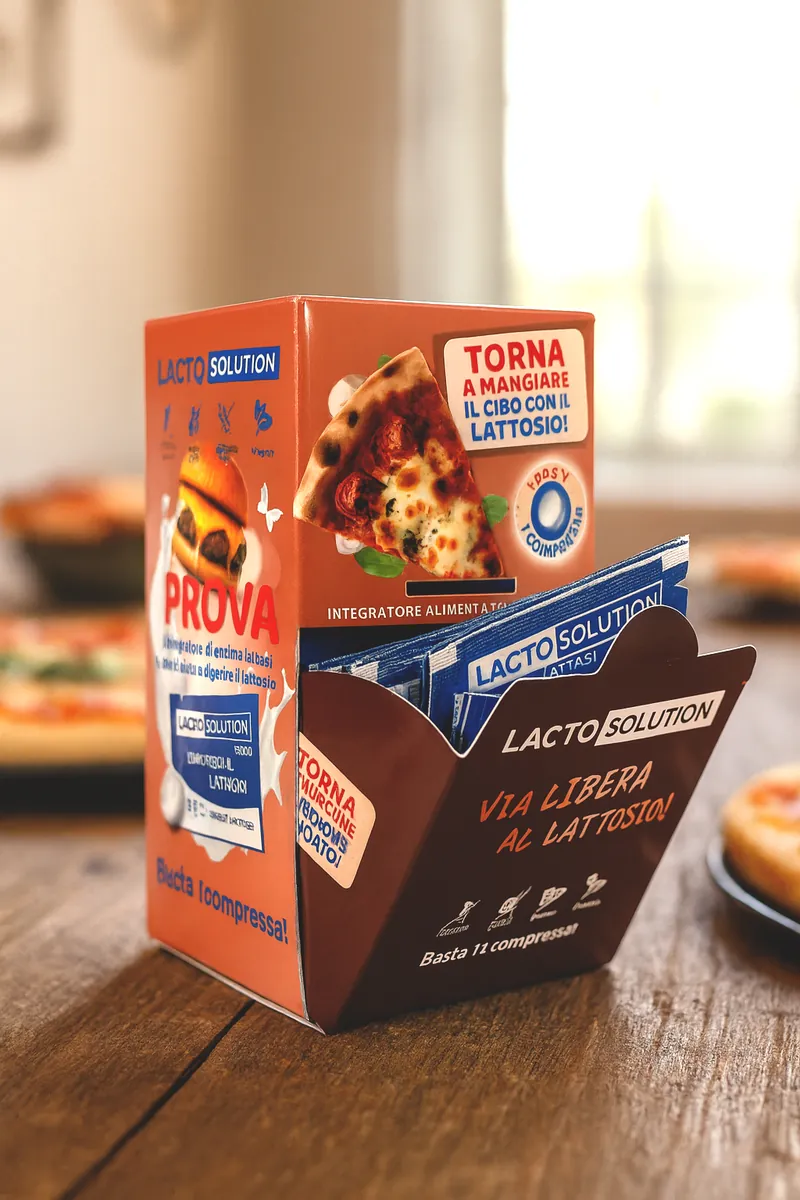
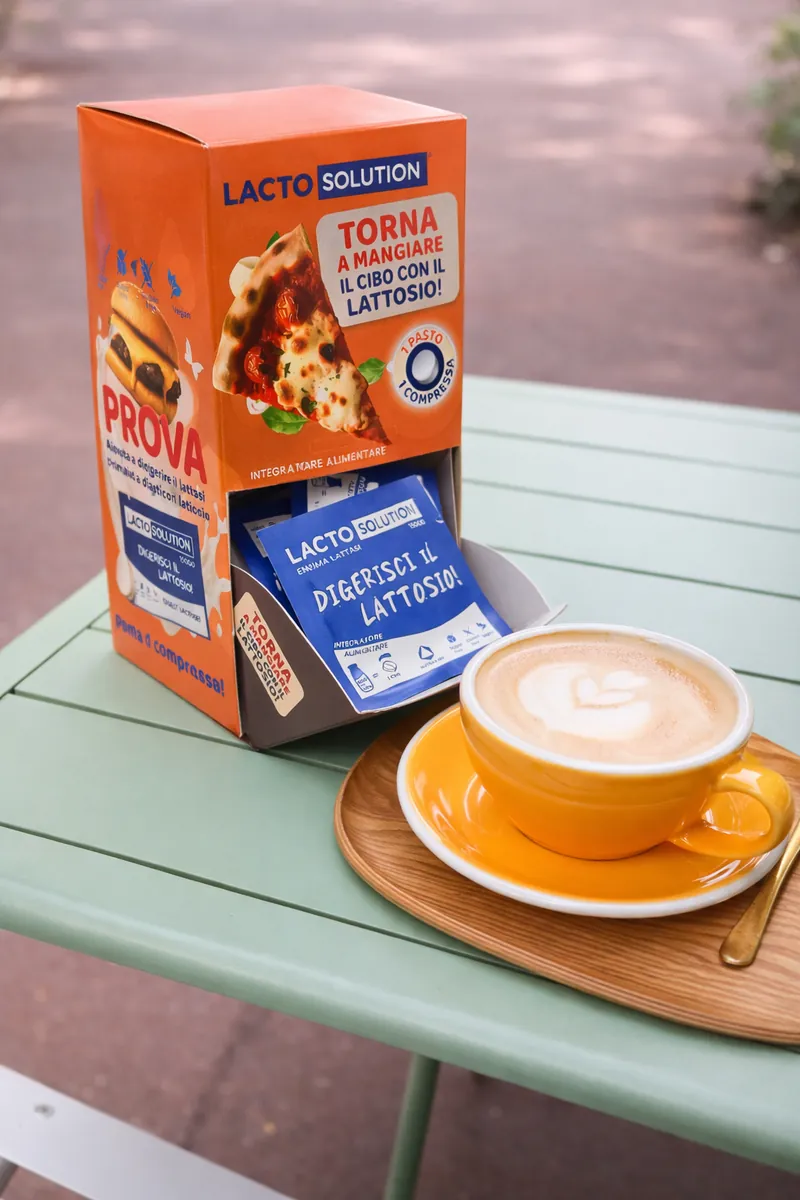
For food service businesses, Lactosolution comes in a counter dispenser with 50 single-dose sachets, each containing one tablet. The dispenser is eye-catching and takes up very little space by the till, on the counter or next to the ice cream display.
- Set up the dispenser: clearly visible, so guests discover the service by themselves.
- Offer the single dose: the guest asks, your team hands over a sachet.
- Enjoy without worry: the guest takes the tablet just before eating and chooses from the whole menu.
No recipe changes, no additional lactose-free products, no extra work in the kitchen. The single doses are hygienically packed and don’t need refrigeration.
Where the service makes the biggest difference
- Pizzerias: pizza, pasta with cream sauce, calzone with ricotta and tiramisu to finish.
- Ice cream parlours and pastry shops: milk ice cream, whipped cream, cakes and pastries.
- Cafés and bars: cappuccino, latte macchiato, hot chocolate.
- Restaurants and hotels: from the breakfast buffet to lunch and dinner.
Tips for getting started
- Make it visible: a short note on the menu or on the table works wonders, for example: “Lactose intolerant? Ask for Lactosolution.”
- Brief your team: all front-of-house staff should know where the dispenser is and how the tablet is taken: one tablet just before eating.
- Offer, don’t advise: Lactosolution is a food supplement. Your team offers the single dose but doesn’t give medical advice.
- Allergen labelling is still required: milk must still be declared as an allergen. The service does not replace correct allergen information.
- Important difference: lactase helps with lactose intolerance, not with a milk protein allergy. Guests with a milk allergy must continue to avoid dairy products.
Frequently asked questions
Is Lactosolution a medicine?
No. Lactosolution 15000 is a food supplement with the enzyme lactase and calcium, notified to the Italian Ministry of Health.
When is the tablet taken?
Just before the meal. The tablet is very small and tasteless.
Do we have to change our recipes?
No. Your dishes stay as they are. That’s exactly the advantage over lactose-free substitute products.
Who can order the dispenser?
The dispenser with 50 single doses is reserved for food service businesses with a VAT number. You can get information on quantities and terms using the form below or on the product page.
Conclusion
Lactose intolerance affects many guests, often without you noticing: they simply order something else, or don’t come at all. With a single dose of lactase right in your venue, you give them back the freedom to choose from the whole menu. For your business it’s a small step with a big impact: more satisfaction, more inclusion and a service people talk about.
Good hospitality means every guest can enjoy their meal without worry.
This article is for information only and does not replace medical advice. Anyone who experiences symptoms after consuming dairy should have the cause checked by a doctor. Food supplements should not be used as a substitute for a varied and balanced diet and a healthy lifestyle. Sources: BARMER, “Laktoseintoleranz: Symptome, Tests und Therapie”; Facioni M. S. et al., “Nutritional management of lactose intolerance: the importance of diet and food labelling”, J Transl Med 2020; EFSA opinion on lactase (2009).
Request Lactosolution for your business
Would you like to offer the Lactosolution dispenser in your pizzeria, restaurant, ice cream parlour, café or hotel? Write to us and we’ll send you all the information on the dispenser, quantities and terms.
 New · free
Calculate your pizza dough
Amounts, yeast and schedule for every style, in seconds. With a pro calculator for pizzerias.
Calculate dough →
Black Friday 2026 at Pizza-Schule: up to 15 % off dough mixers, pizza ovens and accessories
6 to 30 November 2026: up to 15 % off pizza peels and accessories, up to 10 % off dough mixers, dough …
Sunmix EVO Line: Digital Revolution in the World of Pizza
Sunmix EVO Line: professional spiral mixer with touchscreen, designed in Italy. Handles doughs from 60% to over 80% hydration.
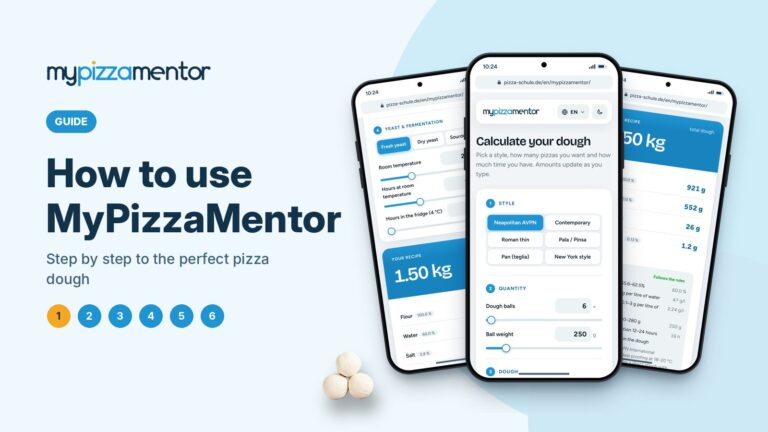
How to calculate pizza dough with MyPizzaMentor: a step-by-step guide
How to calculate pizza dough with MyPizzaMentor: style and amount, yeast and fermentation, recipe, AVPN check, calendar schedule and the pro panel …
 €15Voucher
Subscribe to our newsletter
Subscribe to our newsletter: courses, recipes and offers – plus €15 off your next order of €100 or more.
New · free
Calculate your pizza dough
Amounts, yeast and schedule for every style, in seconds. With a pro calculator for pizzerias.
Neapolitan · Pan · New York
Useful for this recipe
 DIE MODERNE pizza flour – special flour for pizza contemporanea | 10 kg sack19,90 €
- Regina flexible dough scraper for pizza dough balls | SPR-24 & SPR-25 Price range: 13,00 € through 15,50 €
- Dough ball box 40 × 30 × 10 cm for pizza dough, white and colours Price range: 10,90 € through 13,90 €
- Teiger Efficient Dough Residue Cleaning Cloth - Set of 219,00 €
- Regina stainless steel dough cutter and bench scraper | APC-11 Original price was: 15,00 €.12,50 €Current price is: 12,50 €.
- Lid for dough ball box 40 × 30 cm | Hygienic protection for pizza dough Price range: 9,50 € through 10,50 €


Pizza courses

Biga Basis Kurs - Professionelle Technik für Pizzateige 07.11.2026 | Samstagskurs
07.11.2026Only 2 places left


Pizza machen. Backen. Genießen! | Pizza Experience im Pizza-Schule Showroom 29.01.2027
29.01.2027Only 3 places left
Leave a Reply